97% of people search online for local businesses – and most click one of the first three results. If you're not visible on Google Maps, you're losing potential customers to competitors every single day. The good news: local SEO is one of the most effective tools a regionally active business can use. And getting started is easier than most people think.
What is local SEO?
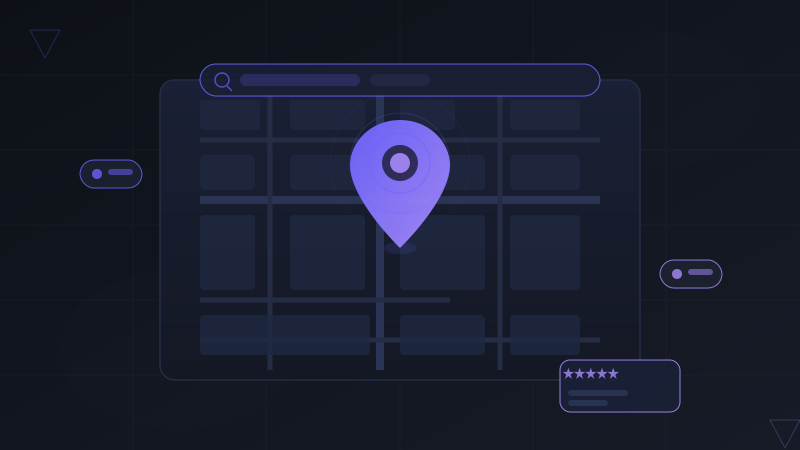
Local SEO covers everything that helps you get found in location-based searches. When someone searches "hair salon near me" or "electrician in [city]," Google shows the so-called Local Pack first – a map with three highlighted business listings. Those three spots are the goal of every local SEO strategy. Unlike classic search engine optimization, which is built around topical relevance, local SEO is about geographic proximity, trustworthiness, and profile quality.
Optimize your Google Business Profile
The single biggest lever in local SEO is your Google Business Profile – formerly known as Google My Business. A complete, well-maintained profile is the baseline for good local rankings. Here's what to get right:
- Complete details: Name, address, phone number, website, opening hours – everything has to be correct and current.
- The right category: Choose the most precise primary category for your business and add relevant secondary categories.
- Opening hours: Keep them up to date, including holidays – mistakes here cost you trust and clicks.
- Photos: Businesses with photos get viewed far more often. Upload fresh, high-quality images regularly.
- Regular posts: Google Business Posts show that your business is active – and they show up directly in search.
- Answer questions: The Q&A section is where users ask questions. Responding quickly and helpfully signals professionalism.
Reviews – your most important local signal
Reviews are a central ranking factor in local SEO. Google weighs the number of reviews as well as their quality and recency. Businesses with lots of genuine, positive reviews show up more often in the top three spots of the Local Pack. So how do you get more reviews? The most effective approach is simply asking – after a successful job, a purchase, or a positive conversation with a customer. A direct link to your review form makes it as easy as possible for customers. Also respond to every review, positive and critical alike. It shows engagement, and Google rewards that.
Use local keywords on your website
Your website is a critical part of the local SEO system. Use keywords on your pages that combine location and service – for example "web design agency Hamburg" or "tax advisor near [neighborhood]." Build dedicated pages for the different cities or districts you serve. These local landing pages help Google understand which regions you're relevant for and improve your chances of ranking in exactly those searches. Important: the content should be authentic and genuinely useful – not just a city name dropped into otherwise generic text.
NAP consistency: name, address, phone number
NAP stands for Name, Address, Phone – and consistency is the key word. Your business name, address, and phone number need to be identical everywhere online: on your website, in your Google Business Profile, in directories like Yelp or industry-specific listings, and across social networks. Even small discrepancies – a slightly different street spelling, a mismatched phone number – can cause Google to dock trust points. A regular check of your online listings should be part of your local SEO routine. (In Germany, that also means directories like Das Örtliche and Gelbe Seiten.)
Bottom line
Local SEO isn't rocket science – but it does take consistency and care. If you fully maintain your Google Business Profile, actively collect reviews, use relevant keywords on your website, and keep your listings consistent, you have every ingredient you need to rank at the top in your region. SEO starts local – and it pays off fast.