The web is changing faster than ever. New technologies, shifting user expectations, and growing competition for attention are pushing businesses to keep evolving their digital presence. Here are the web design trends that actually matter in 2026 - and what you can take away for your own business.
1. Bento Grid Layouts
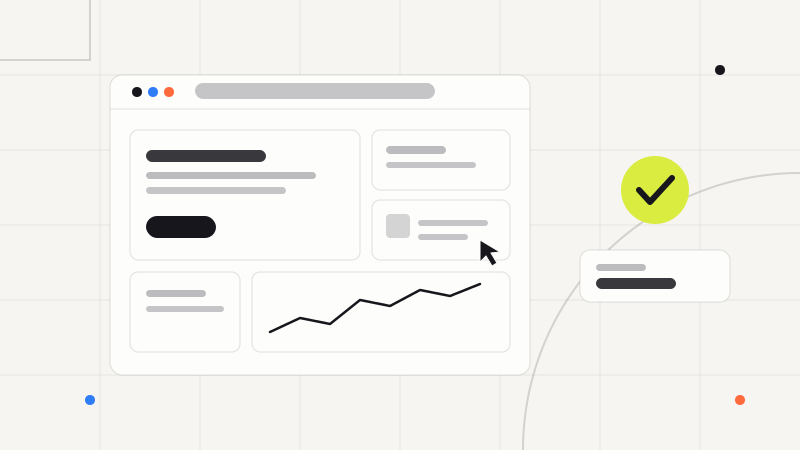
Inspired by Japanese bento boxes, asymmetric grid layouts have become one of the defining web design styles of recent years. Instead of uniform tiles, you get varied compositions of differently sized elements that still feel harmonious.
What makes bento grids so appealing: they let you pack a lot of information into a tight space without feeling cluttered. They're ideal for portfolios, product pages, and feature overviews. In 2026, these layouts are evolving further toward animated, interactive elements.
2. Dark Mode as the Default
Dark mode is no longer an optional extra - it's becoming the standard for many industries, especially tech, the creative sector, and premium products. Dark designs feel focused and modern, and on OLED screens they even save battery.
One thing to keep in mind: dark mode isn't just a light design with the colors inverted. A good dark design is built from the ground up for a dark background - with carefully considered contrast ratios, soft glow effects, and graduated grays instead of pure black.
3. Micro-Animations & Micro-Interactions
Users often don't notice it consciously - but micro-animations make the difference between a website that feels sluggish and one that feels alive. Hover effects, smooth loading transitions, icons that animate on click: all of it signals to users that the page is responding to what they do.
In 2026, these animations are getting subtler and more precise. The era of over-the-top parallax effects is over - what's in demand now is purposeful, meaningful motion that supports navigation without distracting from the content.
4. Typography as a Design Element
Variable fonts and expressive typography are having a renaissance. Big, bold headlines that spill off the edge of the screen - or even shift dynamically - are a powerful design tool that gives brands personality. In 2026, type becomes visual language.
Particularly interesting: pairing a sans-serif for body copy with an expressive display font for headlines creates a clear hierarchy and a distinctive character.
5. Accessibility as a Design Foundation
Accessibility is no longer a nice-to-have - in many countries it's legally required (WCAG 2.2), and Google ranks accessible websites higher too. But beyond the legal requirements: an accessible website is simply a better website for everyone.
In practice, that means sufficient color contrast, keyboard-navigable elements, meaningful alt text for images, and a clear page structure with semantic HTML. By 2026, these standards are the baseline for any professional website.
Conclusion: Quality Beats Quantity
The overarching message behind all these trends is the same: users today expect websites that don't just look good, but feel good to use. Fast, accessible, thoughtful. A website that meets these standards isn't a luxury - it's the foundation of a professional digital presence.
Want to know how your current website measures up? Let's take a look together.